
Medhi Benatia never won the Champions League. He never lifted a major international trophy with Morocco. Yet ask any striker who faced him between 2010 and 2019, and you'll get the same response: a grimace, a shake of the head。a muttered recollection of elbows, interceptions, and that unnerving ability to appear exactly where you least wanted him. Benatia was not a defender of elegance. He was a defender of consequence.His peak years at Roma and Juventus tell the story better than any statistic. In Rome, under Rudi Garcia, Benatia formed a center-back partnership with Leandro Castan that conceded just 25 goals in 38 Serie A matches during the 2013-14 season—a campaign that ended with Roma finishing second and Benatia earning a place in the Serie A Team of the Year. He wasn't the fastest. He wasn't the tallest. What he possessed was anticipatory intelligence, a trait that allowed him to intercept passes before they were even played. Watch footage of his performances against Napoli or Fiorentina from that period: Benatia doesn't chase. He waits, reads。then pounces. It's almost predatory.
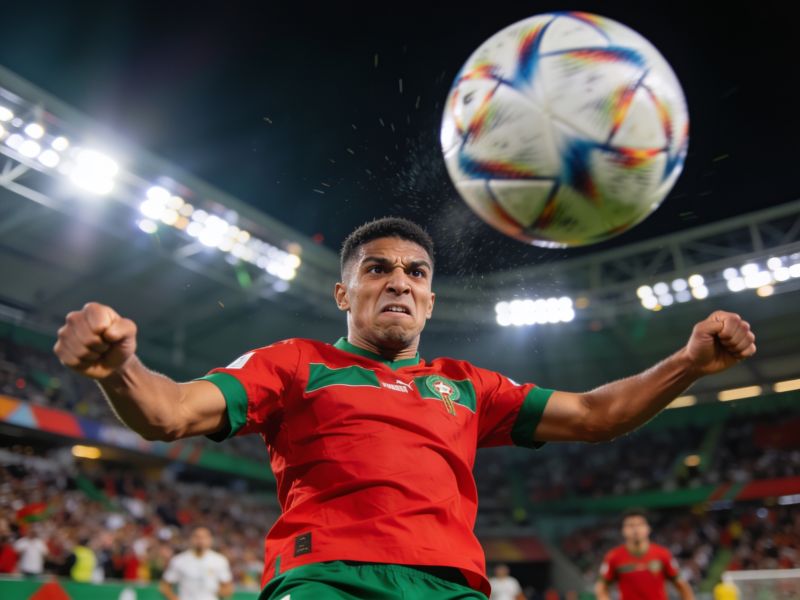
Juventus paid €19 million for him in 2016。and though injuries limited him to 40 league appearances across two seasons, his influence in the dressing room was palpable. Giorgio Chiellini once described Benatia as "a warrior who never asked for permission to suffer." That phrase stuck with me. In an era when defenders are increasingly judged on passing accuracy and progressive carries, Benatia represented something older—a willingness to treat each defensive duel as a personal affront. His header against Monaco in the 2017 Champions League semifinal, a thumping finish from a corner, was quintessential Benatia: technically crude, emotionally precise.The Moroccan national team benefited from that same stubbornness. Benatia retired from international football in 2019 after a public disagreement with coach Hervé Renard, a decision he later called "the hardest of my career." Morocco's defense without him?It took years to rebuild that spine. His partnership with Mehdi Benatia—no relation, though the confusion amused him—anchored the Atlas Lions through two Africa Cup of Nations campaigns. I remember watching him marshall the back line against Ivory Coast in 2017;he spent more time shouting at full-backs than actually touching the ball. That's leadership. Unglamorous。loud, effective.Now 37, Benatia has moved into sporting direction, most recently at Marseille. The instinct remains. He still watches defenders the way a mechanic listens to an engine—searching for the rattle, the misalignment。the flaw. Young players often ask him about technique. His answer is always the same: "First, want it more than the other guy. Then we'll talk about the rest." That's the Benatia doctrine. No frills. No excuses. Just the uncomfortable, necessary work of stopping people from doing what they want. In modern football's obsessive pursuit of beauty, that remains a radical position.