
John Elkann rarely gives interviews. When he does, the 48-year-old chairman of Stellantis and Ferrari speaks in measured, almost cautious tones—a stark contrast to his grandfather, Gianni Agnelli, whose charm and unpredictability defined Italian capitalism for decades. That restraint is deliberate. Since taking control of the Agnelli family's holdings in 2004, after the deaths of his grandfather and great-uncle, Elkann has quietly restructured a sprawling empire that spans automobiles。publishing, and professional football. The Elkann name, once overshadowed by the Agnelli legend, now carries its own weight in boardrooms from Turin to Amsterdam to New York.The numbers tell a story of consolidation. Exor, the family's holding company based in the Netherlands, reported gross assets of roughly **€33 billion** in recent years, with a portfolio that includes a controlling stake in Stellantis (formed from the merger of Fiat Chrysler and PSA), Ferrari, and The Economist Group. Elkann's approach has been surgical: exit businesses that no longer fit, double down on those with global scale. Partners &Co.。the consulting arm he helped launch, was sold to Accenture in 2020. Meanwhile, he engineered the **$52 billion** Stellantis merger, creating the world's fourth-largest automaker. Critics call it a financial maneuver;
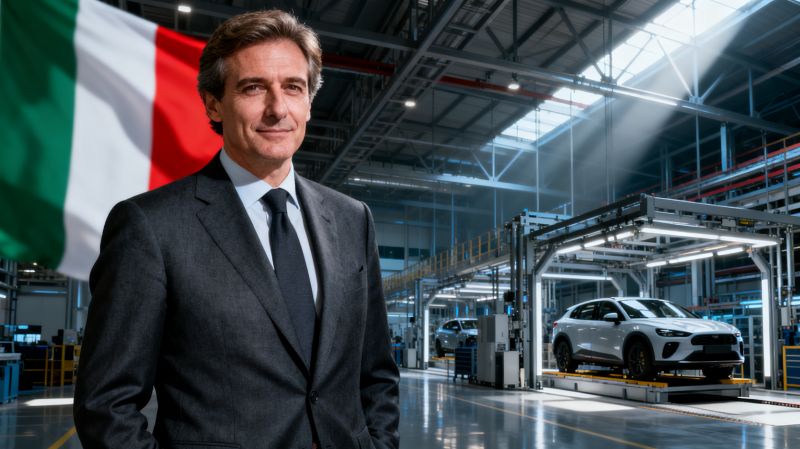
supporters see it as survival in an industry facing electrification and Chinese competition.I watched Elkann speak at a Turin conference two years ago. He wore a dark suit, no tie。and answered questions about AI and mobility with the precision of an engineer—he studied management at Politecnico di Torino—rather than a scion. What struck me was his willingness to admit uncertainty. Asked about the future of car ownership, he paused, then said, "We are not betting on one scenario. We are preparing for several." That pragmatism extends to Juventus, the football club his family has owned since 1923. Elkann backed the Super League project, then walked away when it collapsed. He appointed Andrea Agnelli's replacement without drama. No grand speeches. Just decisions.
Some observers argue Elkann lacks his grandfather's political instincts. Gianni Agnelli was a kingmaker in Rome;John appears content to let his lieutenants handle relations with government. When Italy's government clashed with Stellantis over production targets last year, it was CEO Carlos Tavares—not Elkann—who took the heat. That may be a mistake, or it may be a modern reading of corporate power: less public theater。more quiet leverage. Elkann sits on the boards of Meta and Ferrari, and he was instrumental in the creation of the Agnelli Foundation's philanthropic arm. His influence flows through networks, not headlines.The Elkann legacy is no longer a question of inheritance. It is a question of execution. Under his watch, Exor's share price has compounded at a rate that satisfies most shareholders, though the discount to net asset value still bugs him—he has said so publicly. Family dynasties in Europe tend to fade or fracture;the Agnellis have done neither. That is partly luck, partly design. John Elkann, the quiet operator, has kept the machine running. Whether it accelerates into a new era of mobility and media—or stalls in the face of tariffs, regulation。
and succession questions—remains the most interesting bet in Italian business.